
Custom Dictionary & Custom Glossary
The Custom Dictionary can help you customize specific word replacements for Auto Captions, while the Custom Glossary helps Auto Captions recognize approved words and keep them consistent.
Navigating to Captions and Audio Settings
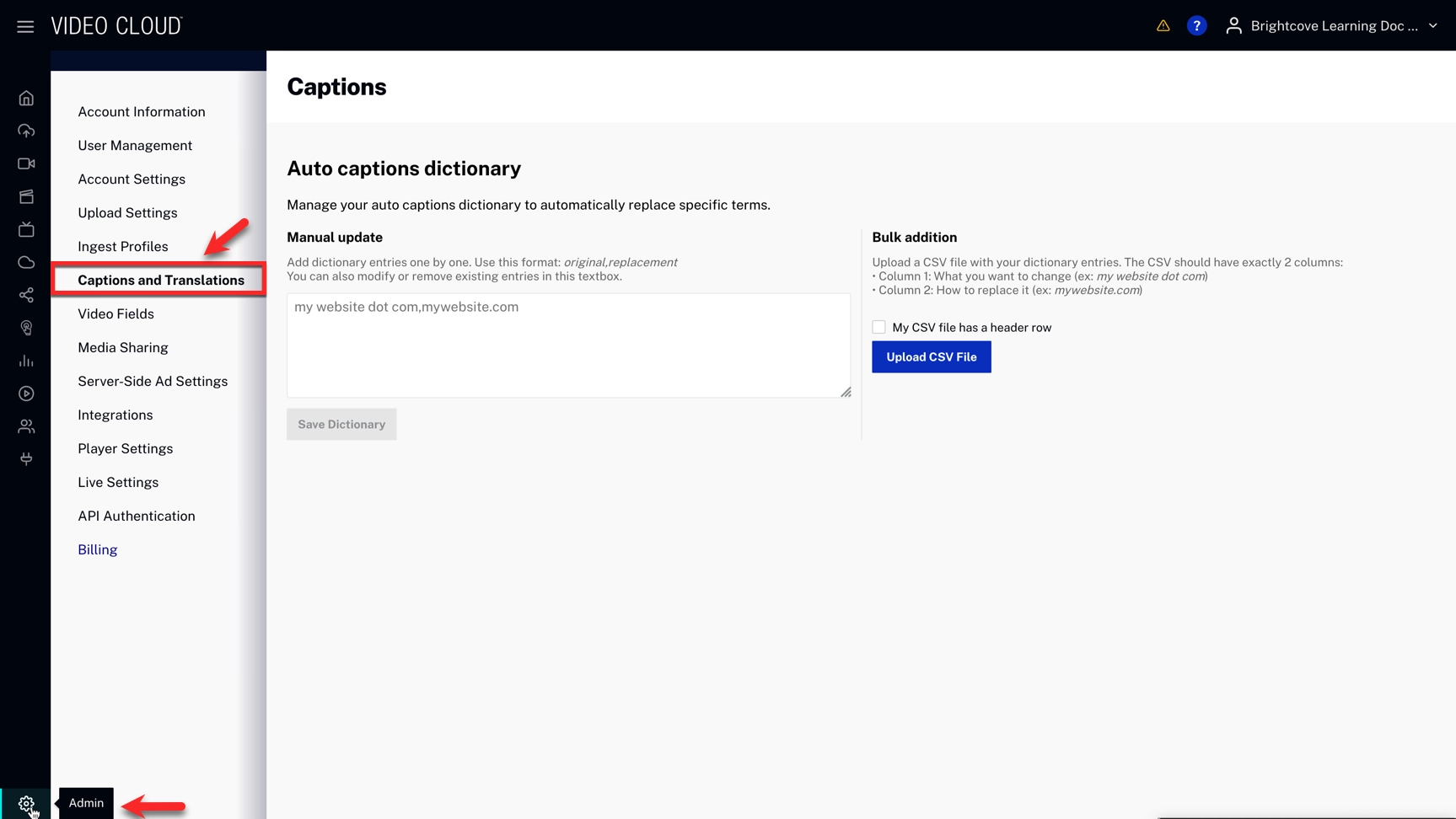
The Captions and Audio page allows you to manage your custom dictionary and custom glossary.
Click on the Admin Menu and select Captions and Audio.
Adding Manual Entries
Custom Dictionary
The Custom Dictionary (labeled Text Replacement Dictionary in Studio) allows you to add words and phrases that should be replaced with a different word or phrase.
To add a word or phrase to the custom dictionary, follow the next steps:
-
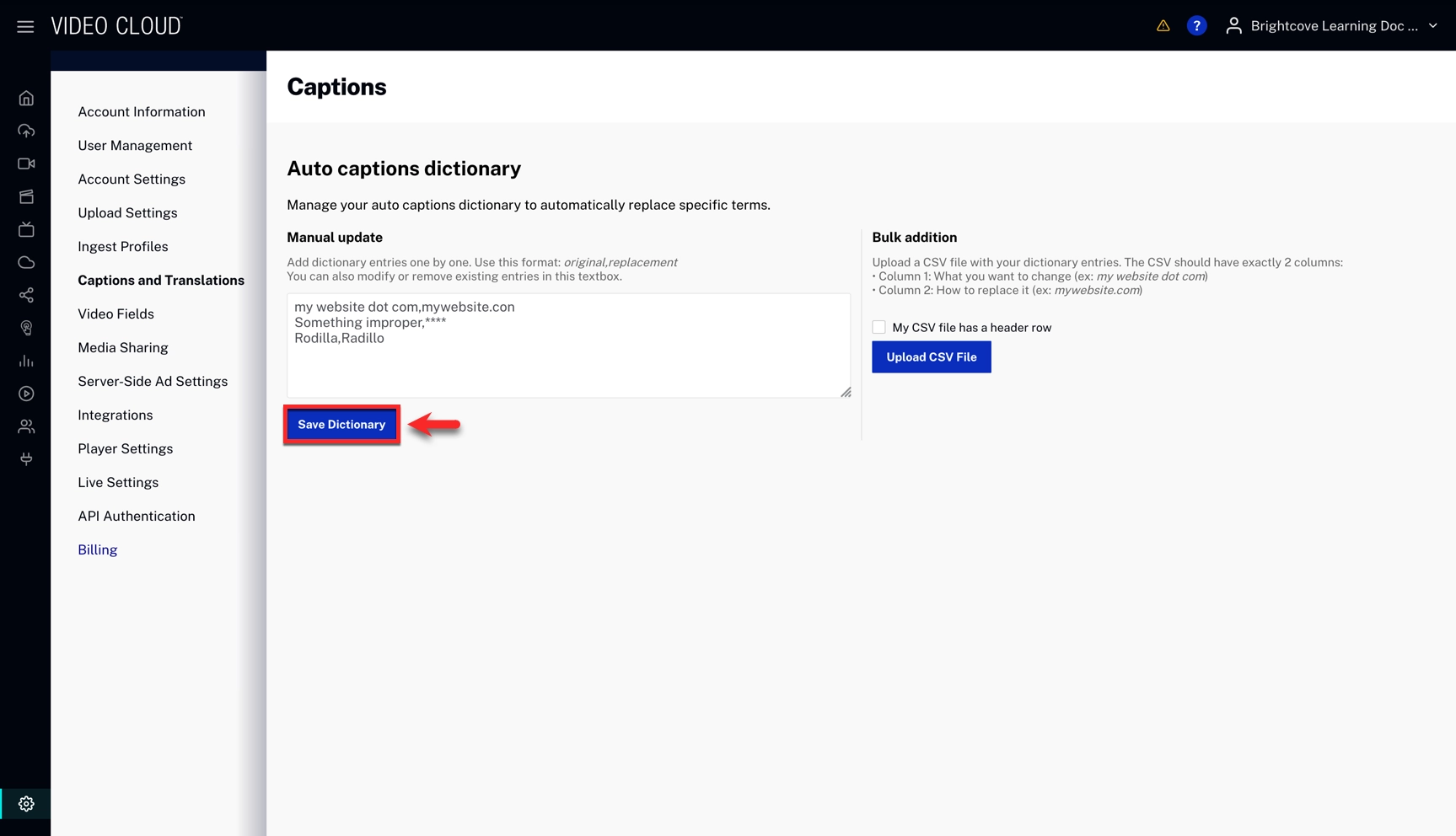
Click Add and enter your entries in the Edit Text Replacement Dictionary dialog. Each entry pairs an original word or phrase with its replacement:
original word or phrase → replaced word or phrase -
Click Save
- You will see the message Text replacement dictionary updated successfully.
Custom Glossary
The Custom Glossary allows you to add words and phrases that should be recognized and kept consistent.
To add a word or phrase to the custom glossary, follow the next steps:
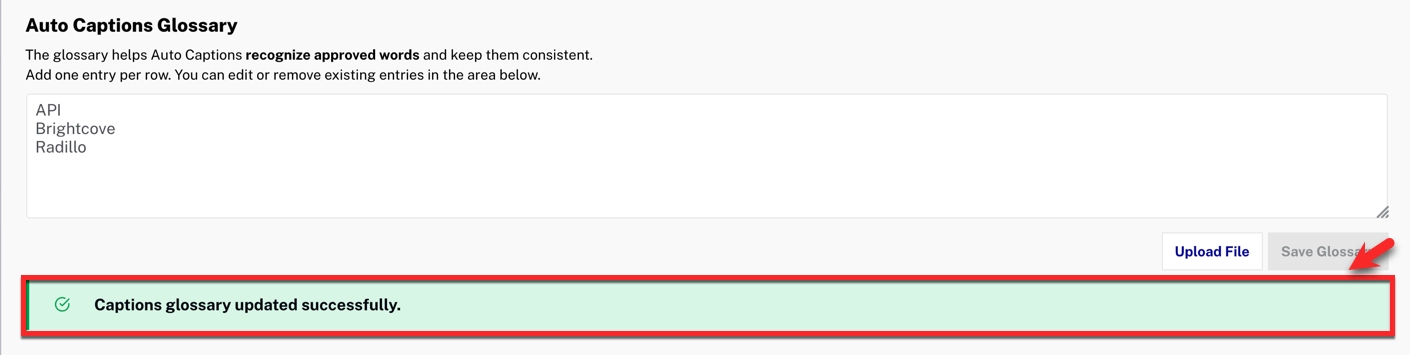
- Click Edit and enter the word or phrase you want to add to the custom glossary. Add each term separately.
- Click Save
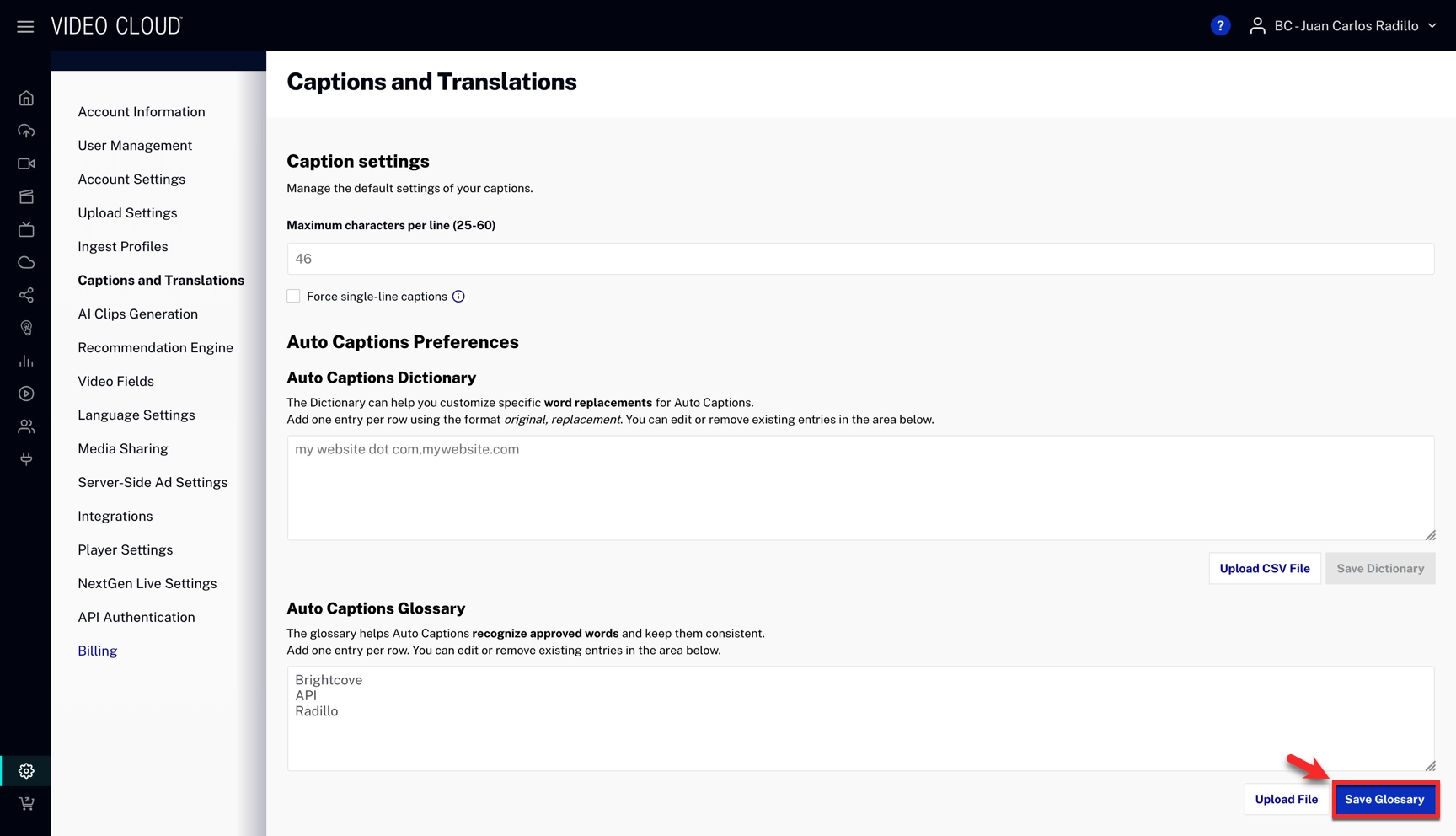
- You will see the message Captions glossary updated successfully.
Adding Bulk Entries
Custom Dictionary
To add entries in bulk, follow the next steps:
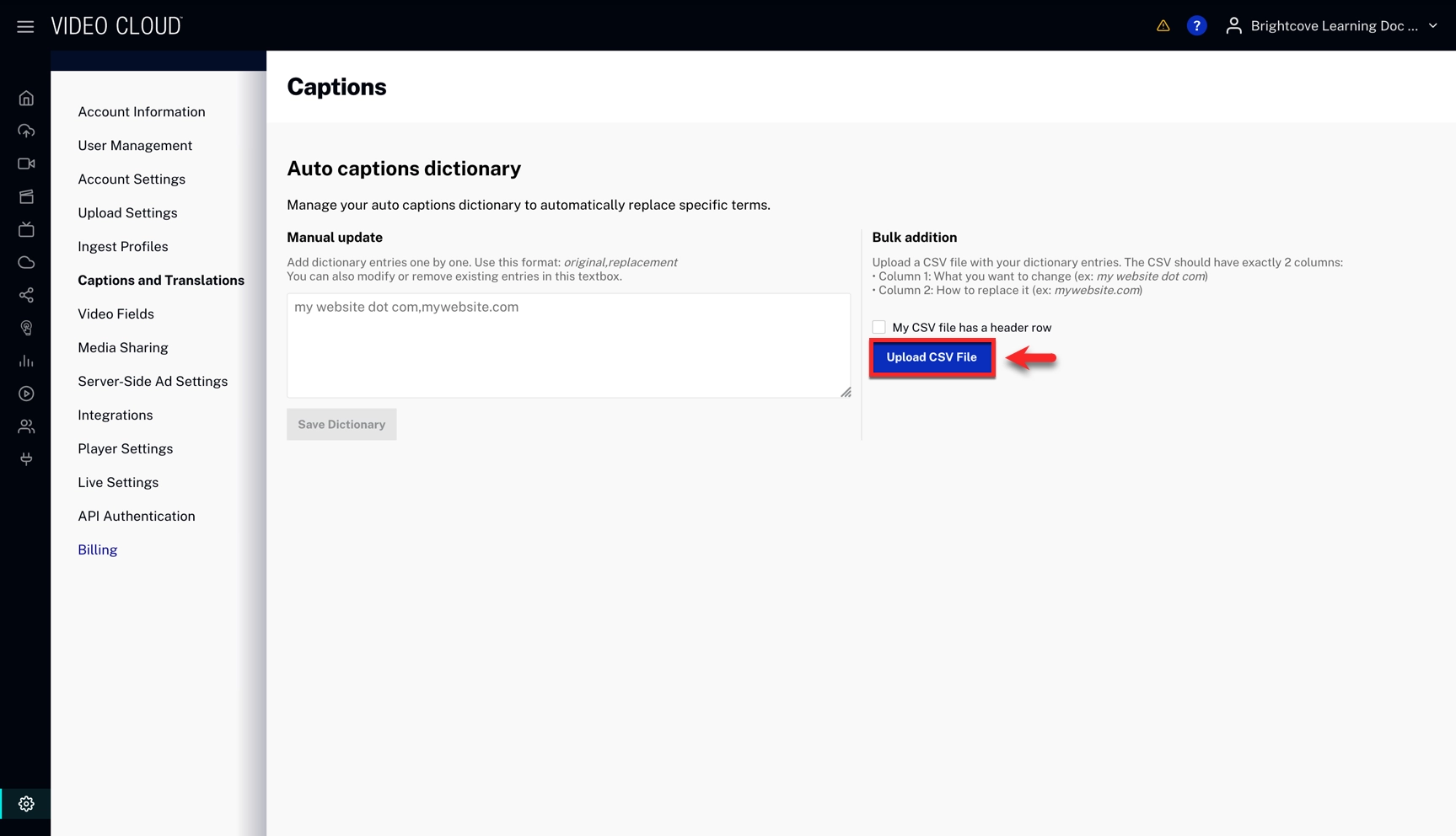
- Click Upload CSV
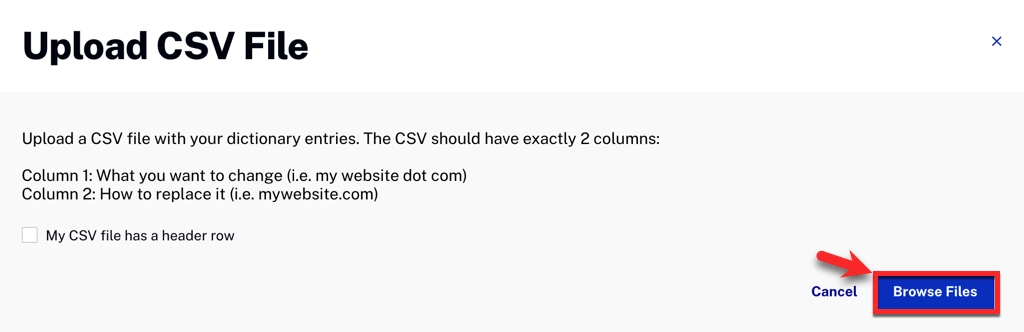
- Click Browse Files to select your CSV file.
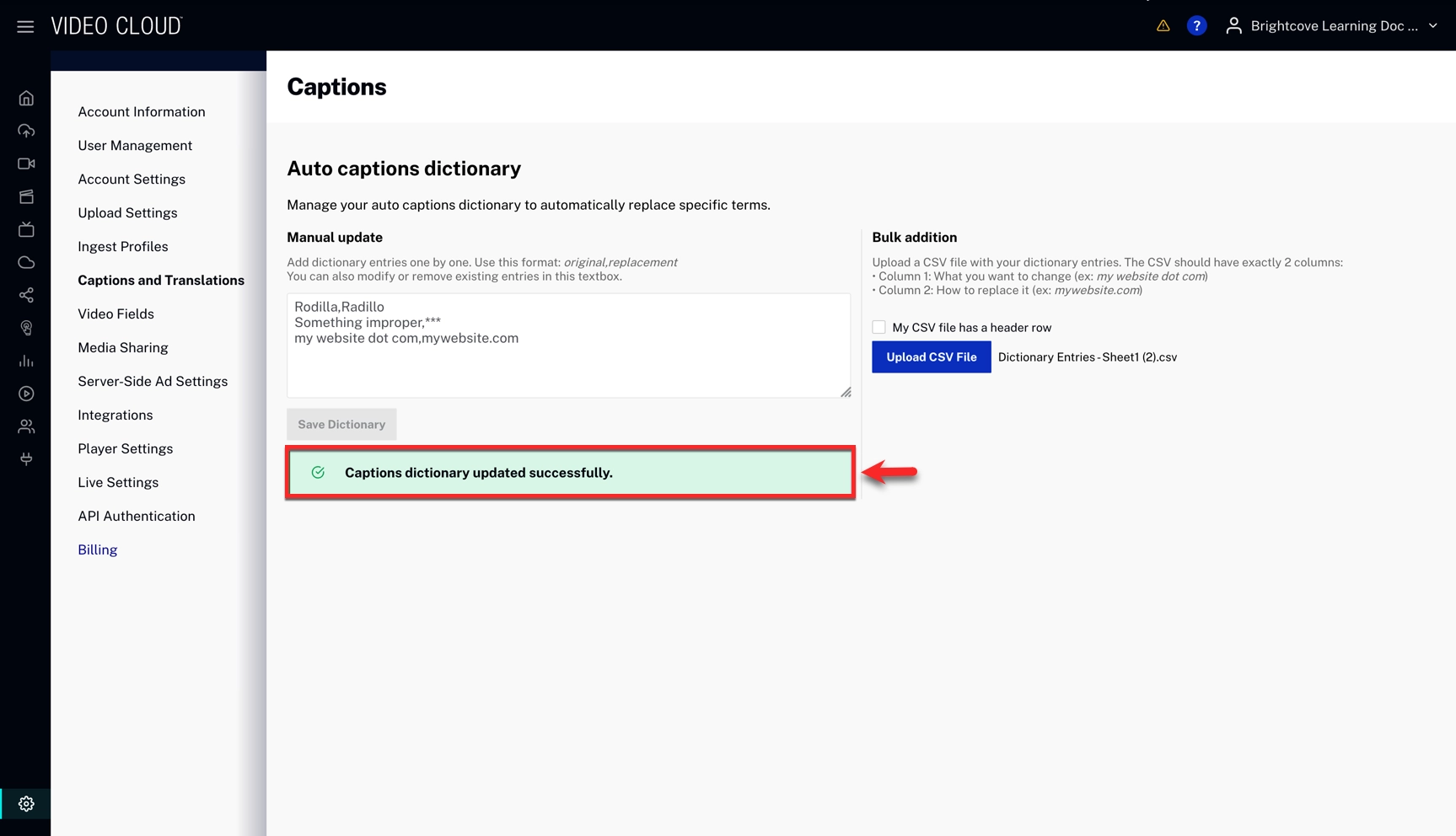
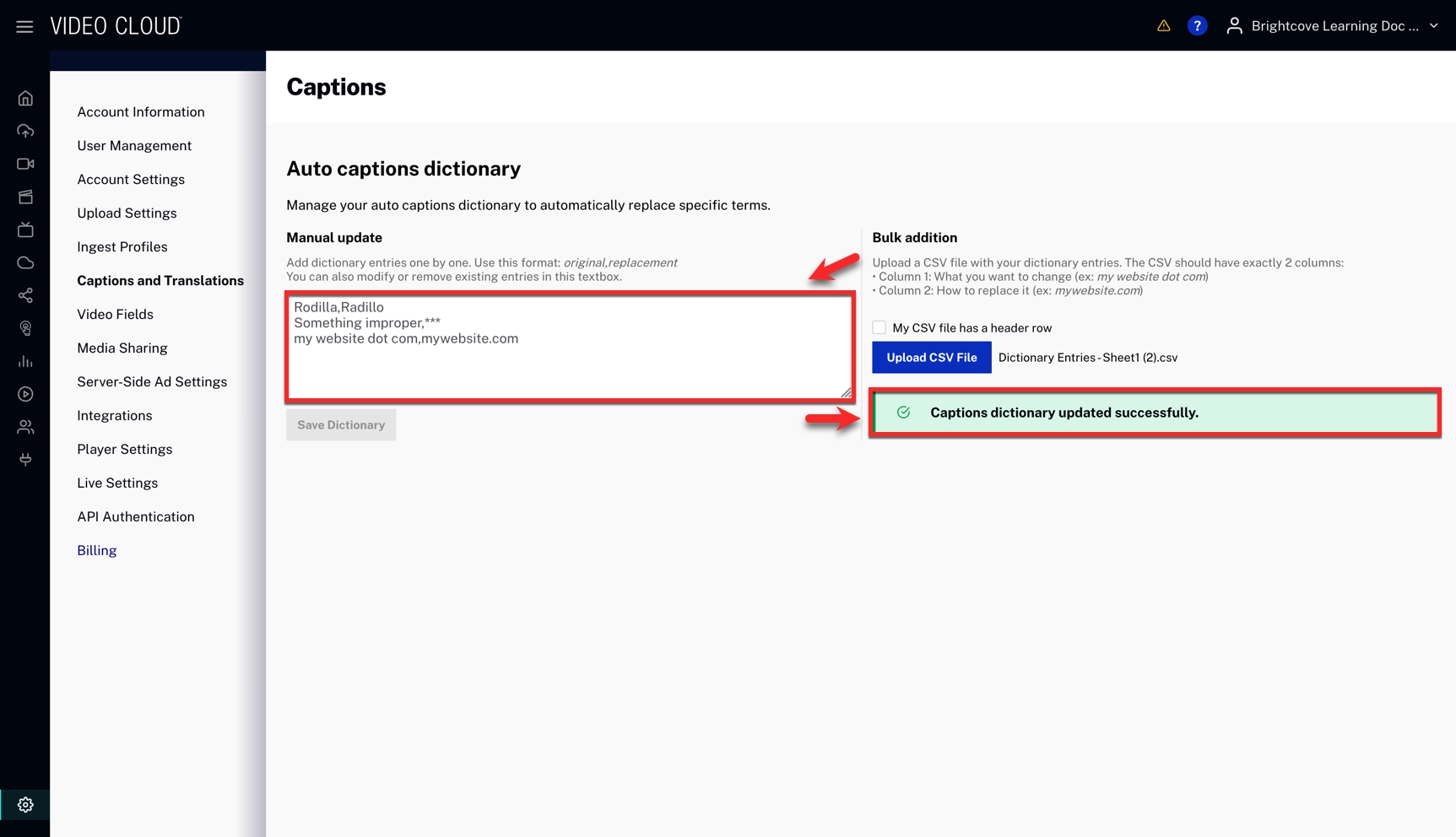
- You will see the message Captions dictionary updated successfully. and the Text Replacement Dictionary section will show your updated entries.
Custom Glossary
To add entries in bulk, follow the next steps:
- Click Upload CSV
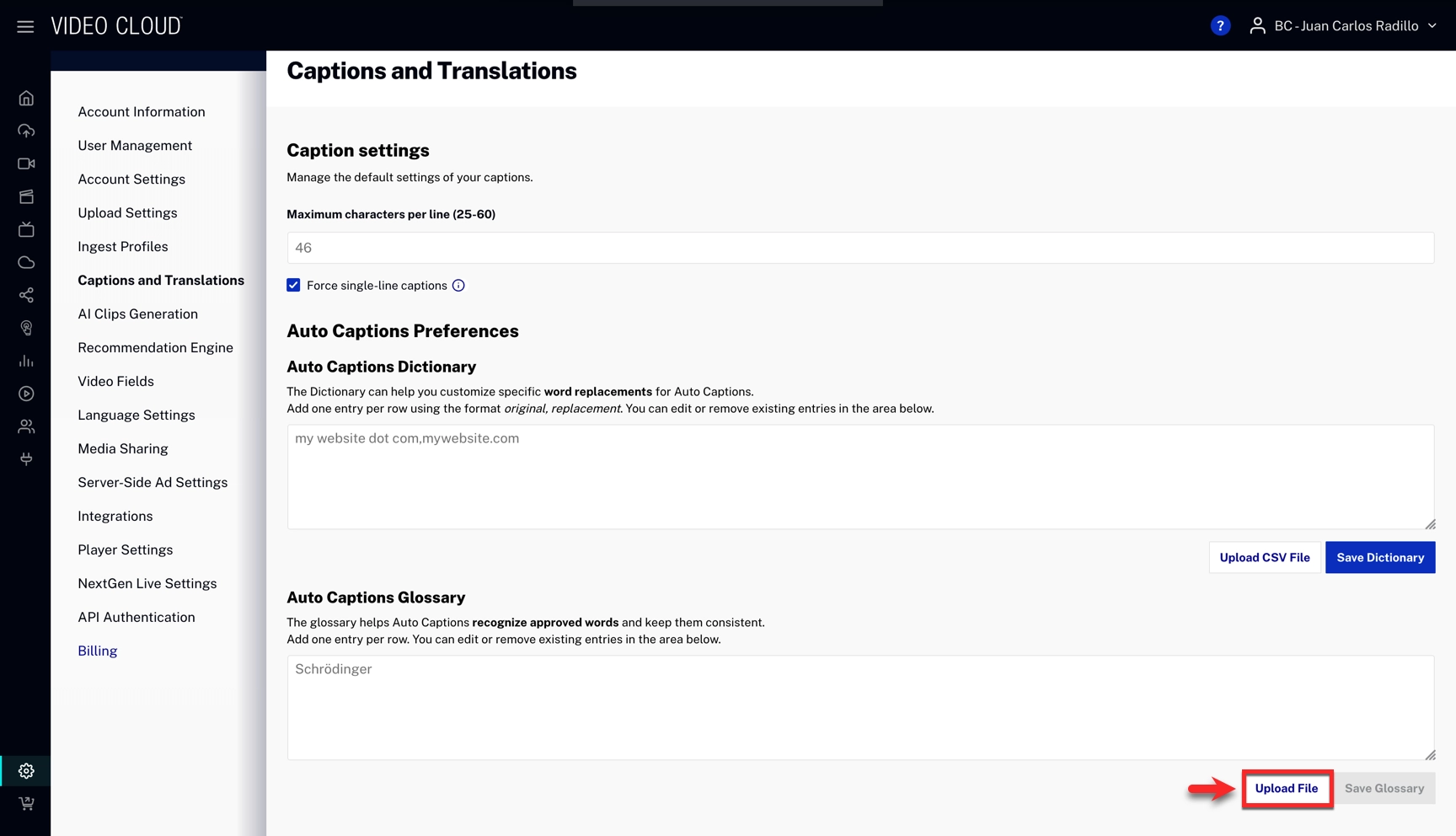
- Select and open your file
- You will see the message Captions glossary updated successfully. and the Glossary section will show your updated entries.
Creating a Language-Specific Dictionary or Glossary
The Custom Dictionary and Custom Glossary above apply to Default (all languages), meaning updates affect every language used for auto-captioning. You can also create a language-specific Dictionary or Glossary that only applies when auto-captioning in that language.
To create a language-specific Dictionary or Glossary, follow the next steps:
-
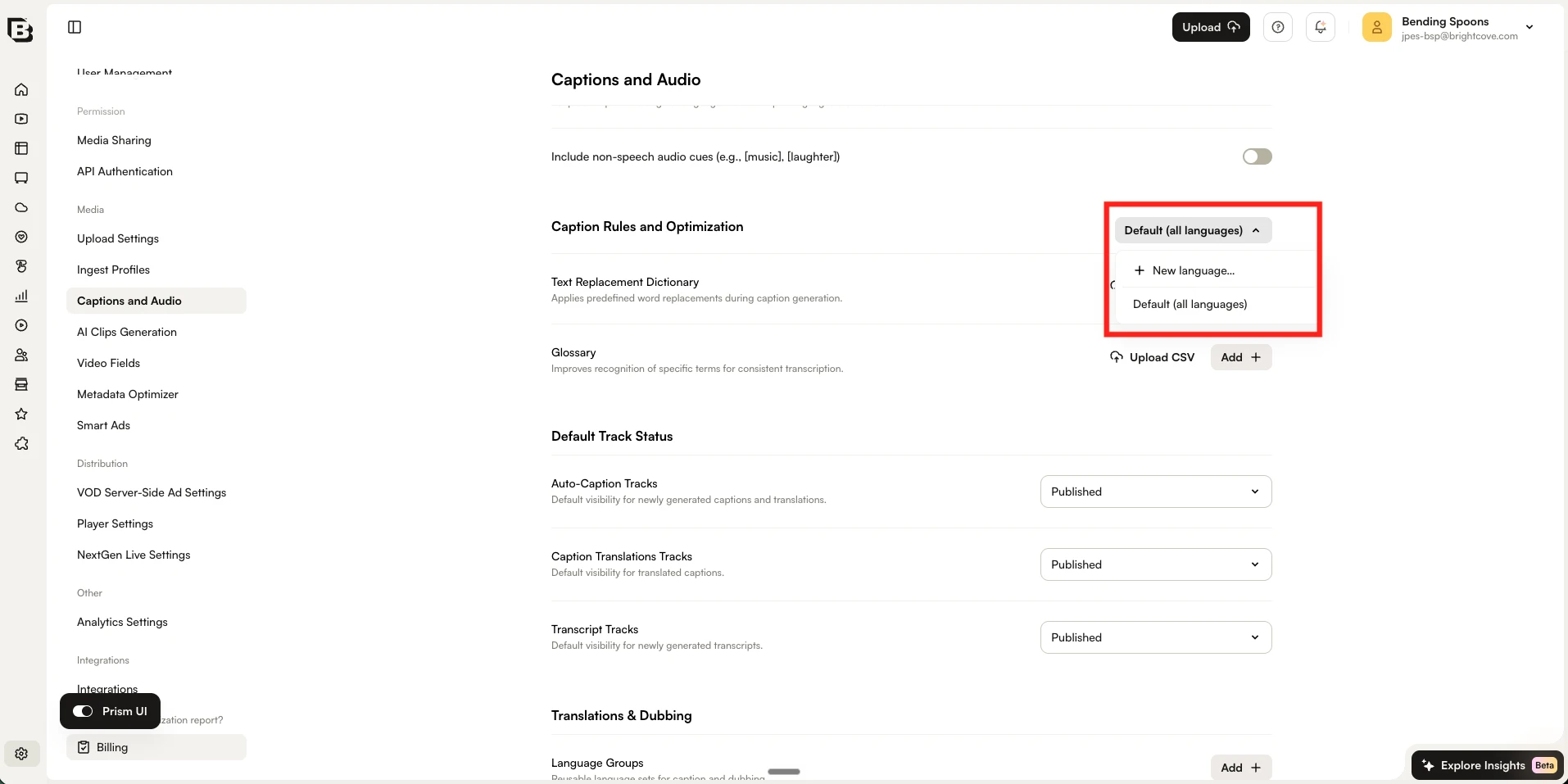
In the Caption Rules and Optimization section, click the language dropdown (it reads Default (all languages) by default), then select New language...
-
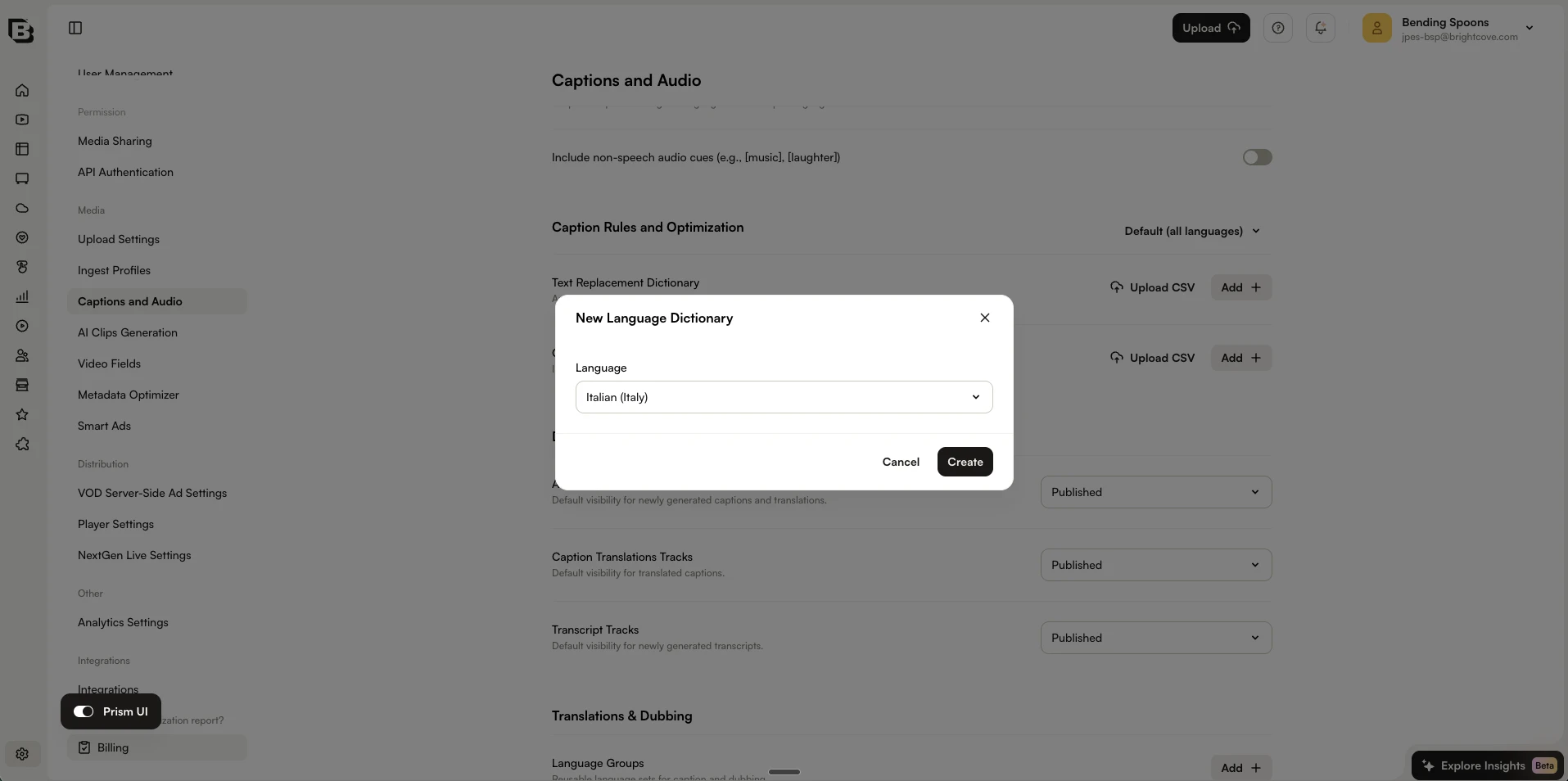
In the New Language Dictionary dialog, select the language and click Create.
-
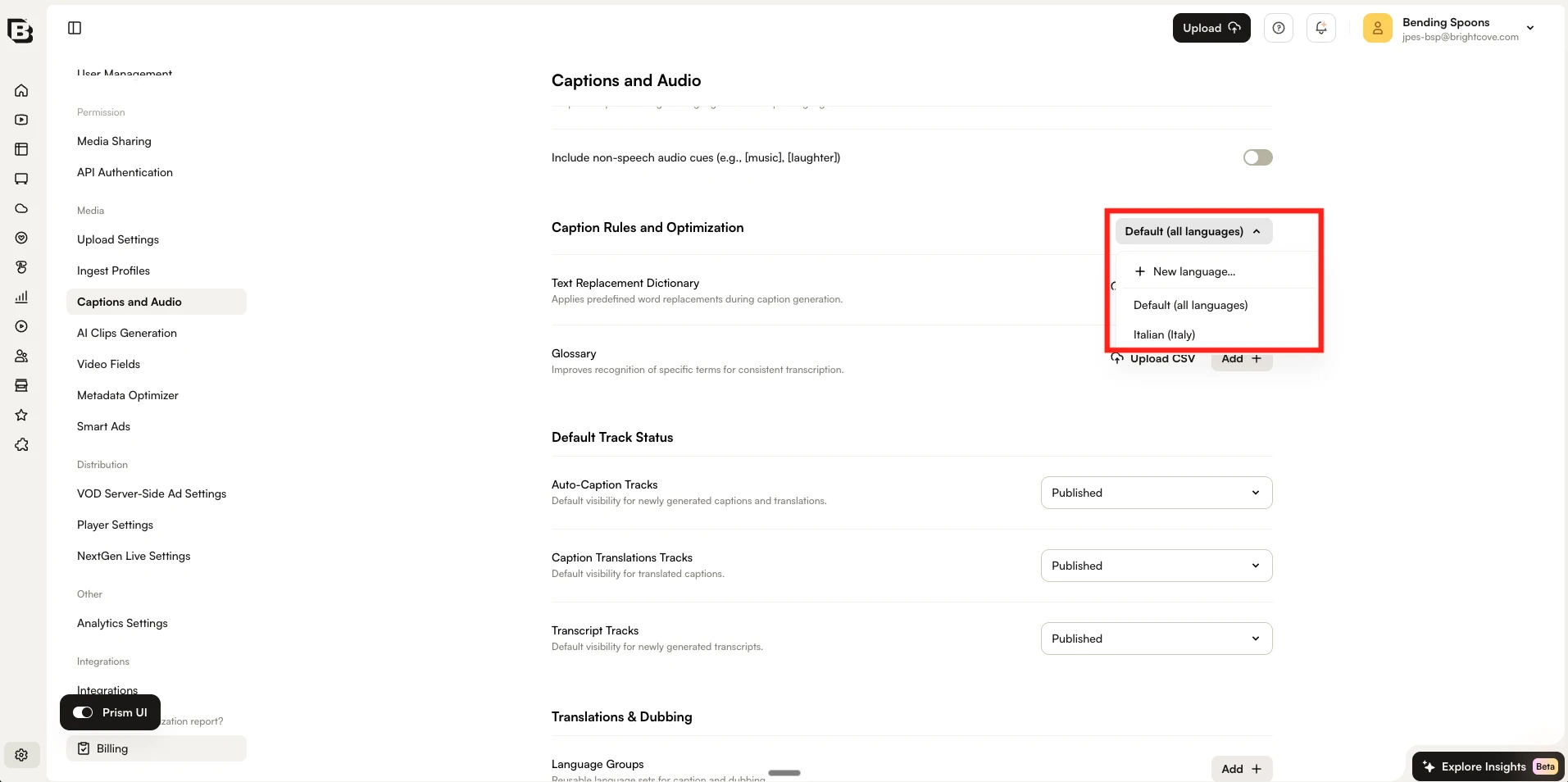
The new language now appears in the dropdown alongside Default (all languages). Select it to manage its Dictionary and Glossary entries the same way as described in Adding Manual Entries and Adding Bulk Entries above.
Triggering the Custom Dictionary & Custom Glossary
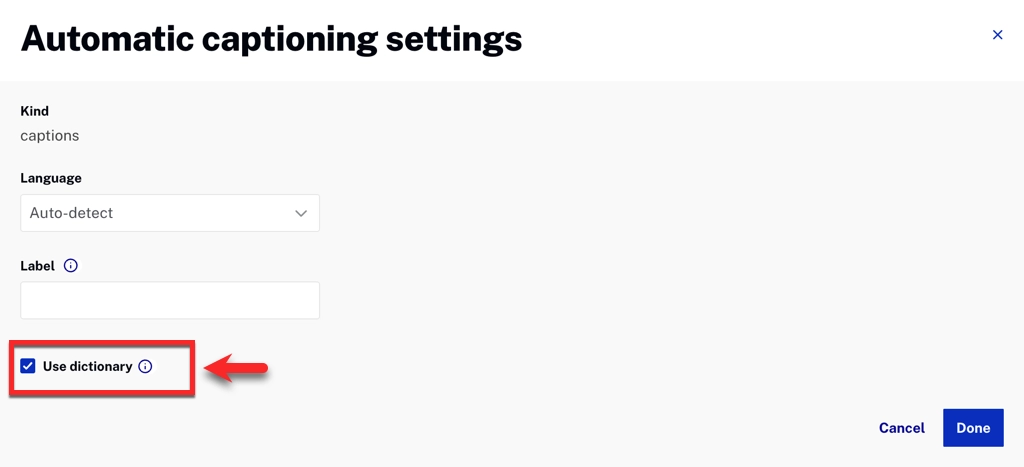
Select Use Dictionary in the Captions section of the Upload dialog to activate the custom dictionary and custom glossary while Generating captions when uploading videos.
Using the API
You can also manage your custom captions dictionary and glossary using the Brightcove Ingest API.
-
To retrieve the current custom dictionary and custom glossary entries, send a
GETrequest to:https://ingest.api.brightcove.com/v1/accounts/{account_id}/autocaption-dictionarySample response with one dictionary entry and one glossary entry:
{ "entries": { "My website dot com": "mywebsite.com", "Schrödinger": "" }, "message": "AI dictionary retrieved successfully" } -
To add or remove entries, send a
PUTrequest to the same endpoint with a request body such as:{ "add": { "hello": "hi", "world": "earth", "Schrödinger": "" }, "remove": { "house": "home" } } -
To use the dictionary and glossary during ingestion, include
"use_dictionary": truenext to the other transcription parameters in the ingestion request.